
Spinal implants evolve to smaller, more adaptable designs that increase comfort
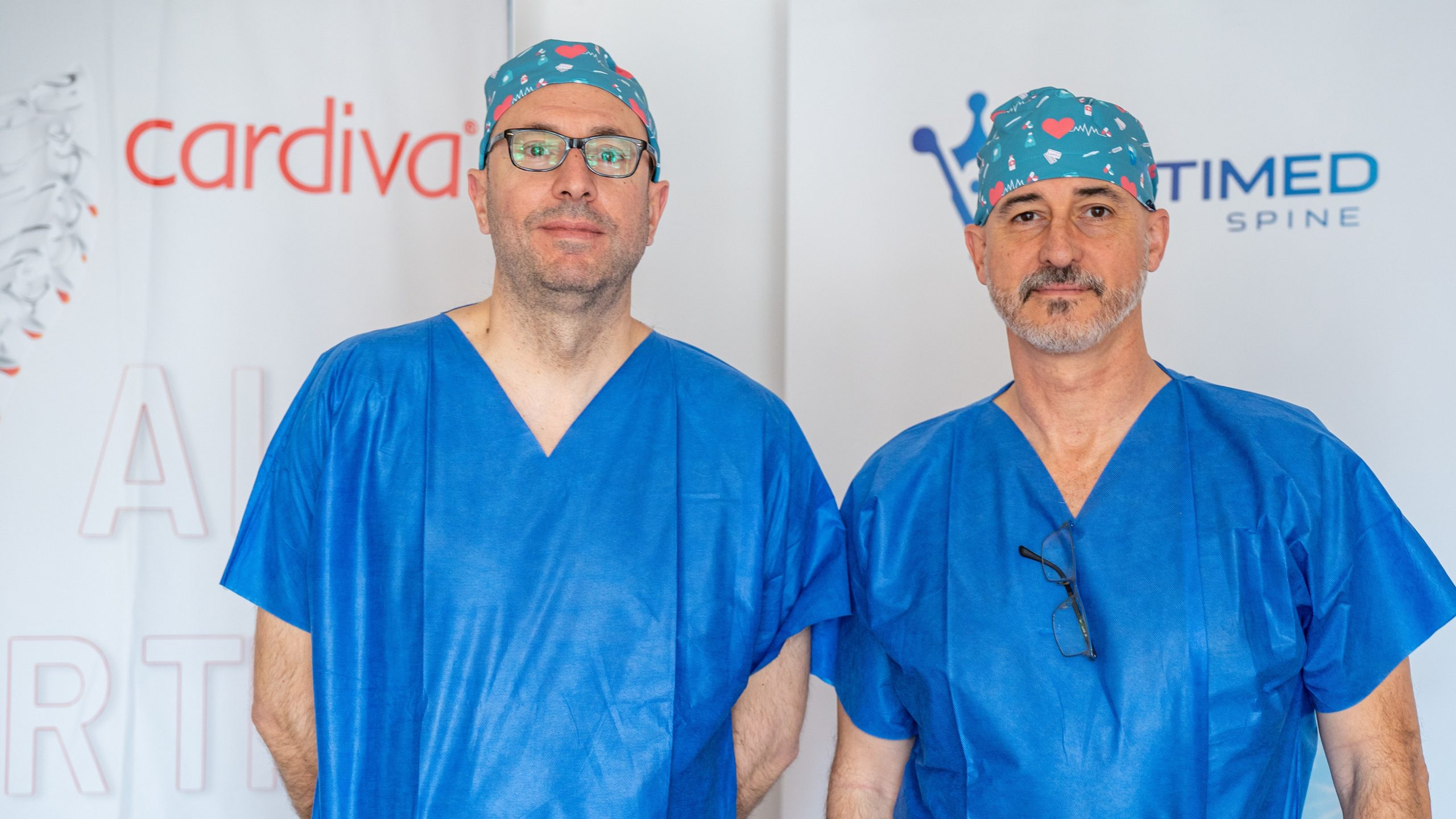
The Anatomy Room of the University of Murcia has hosted, within the Medical Education program offered by Cardiva Spine, the Basic Course on Vertebral Instrumentation, an activity focused on the understanding and actual handling of spine surgery techniques, aimed at orthopedic and trauma surgeons and neurosurgeons.
According to Dr. Ernesto González Rodríguez, traumatologist of the Spine Unit of the Hospital General Universitario Morales Meseguer and co-director of the course, “in the last 30 years, both the diagnostic means and the technological innovations in spinal pathology have led to a substantial improvement in the results of these injuries. Knowing the basic fundamentals of treatment, as well as modern devices, is a mandatory training activity for future specialists”.
As this is a basic course, it has focused on open and percutaneous instrumentation techniques from the posterior approach, which is the most common. “We have divided the training into a theoretical module, with detailed lectures on the indications, methodology and complications, and a practical session in the anatomy room where the students were able to personally perform these interventions under the guidance of the instructors,” explains Dr. González Rodríguez, who states that “courses of these characteristics are not so common in Spain”.
“In recent years, spinal implants have evolved significantly, with designs that are smaller and fit the vertebrae better, increasing patient comfort. In addition, customized 3D guides, surgical navigation and robotic-assisted surgery are now being used to achieve greater precision. These technologies are especially beneficial in cases of complex deformities, increasing safety and surgical results,” explains Dr. Ángel Escámez Pérez, traumatologist at the Spine Unit of the Hospital Clínico Universitario Virgen de la Arrixaca.
The specialists also point out that minimally invasive techniques allow percutaneous screws to be placed through small incisions, reducing muscle and tissue damage around the spine. Endoscopy also makes it possible to treat frequent pathologies with minimal access and less surgical aggression. “All of this promotes faster recovery, less postoperative pain and an earlier return to daily life,” they note.
Regarding the challenges still unresolved in spine surgery, Dr. Escámez Pérez points out that “one of the main ones is poor bone quality in patients with osteoporosis, which is becoming more and more frequent due to the increase in life expectancy. No matter how advanced an implant may be, if it does not have adequate bone to anchor it, there is a risk that it will loosen over time. Therefore, the future lies in improving the treatment of osteoporosis, optimizing bone quality before and after the intervention”.