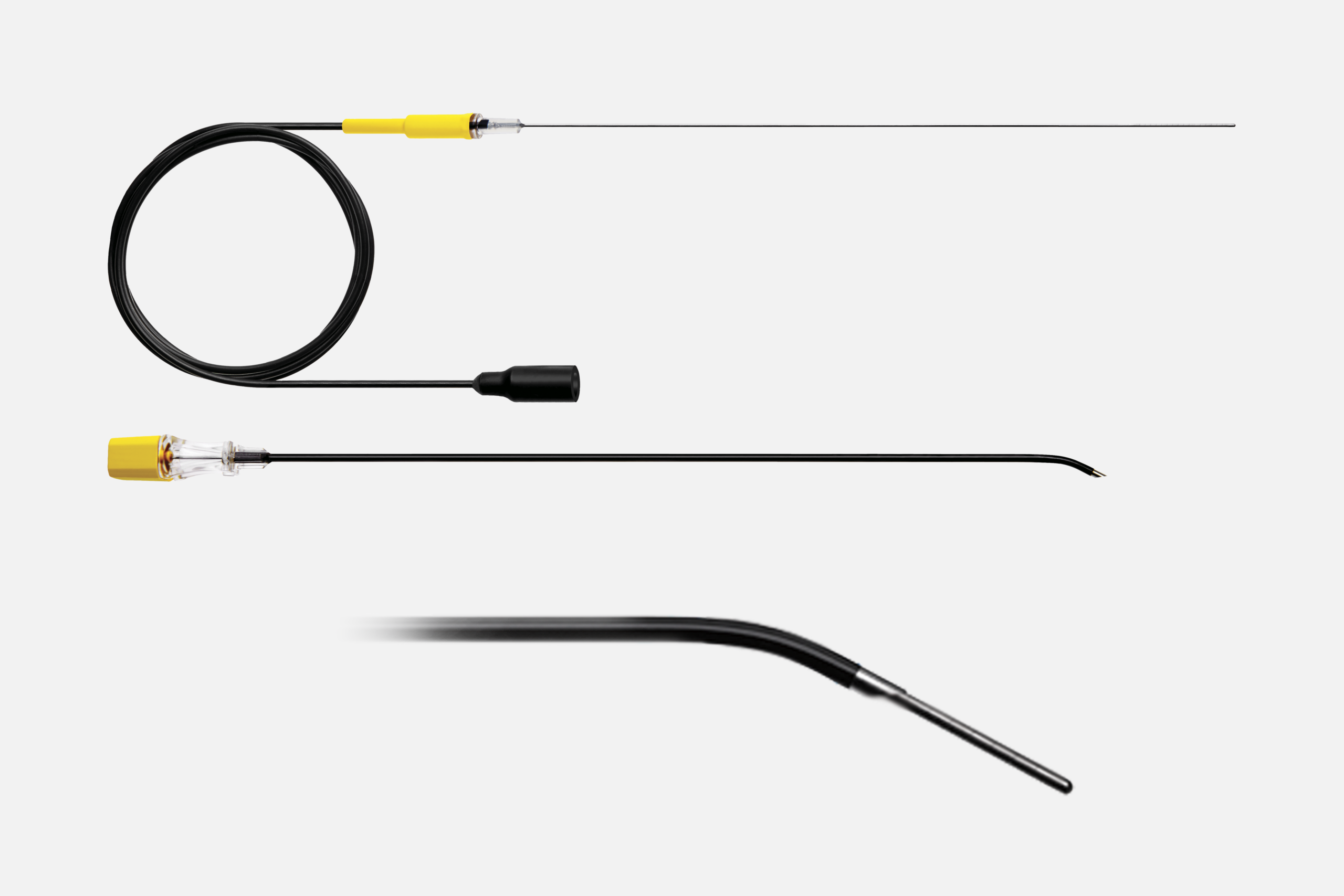
FLEXTRODE
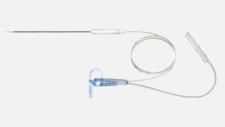
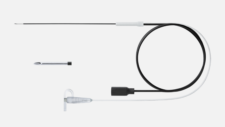
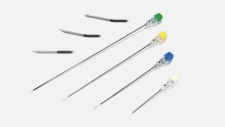
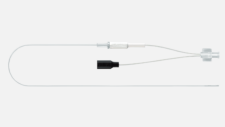
FLEXTRODE is supplied as a kit containing an introducer cannula and an RF electrode with an active tip for stimulation and
thermal ablation, specifically designed for accessing the intervertebral disc at the lumbar level. It falls under the category of TAPs (
, Thermal Annular Procedures) for the treatment of discogenic pain or IDD.
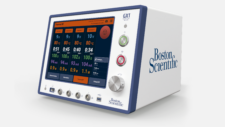
Radio Frequency
FLEXTRODE
FLEXTRODE is supplied as a kit containing an introducer cannula and an RF electrode with an active tip for stimulation and
thermal ablation, specifically designed for accessing the intervertebral disc at the lumbar level. It falls under the category of TAPs (
, Thermal Annular Procedures) for the treatment of discogenic pain or IDD.
Technique
1. The patient is placed in the prone position on an X-ray fluoroscopy table, sedation is administered, and the site
The surgical site is prepared using aseptic technique, and the skin at the cannula insertion site is infiltrated with local anesthesia.
Always use aseptic technique and X-rays during the placement and treatment of Flextrode.
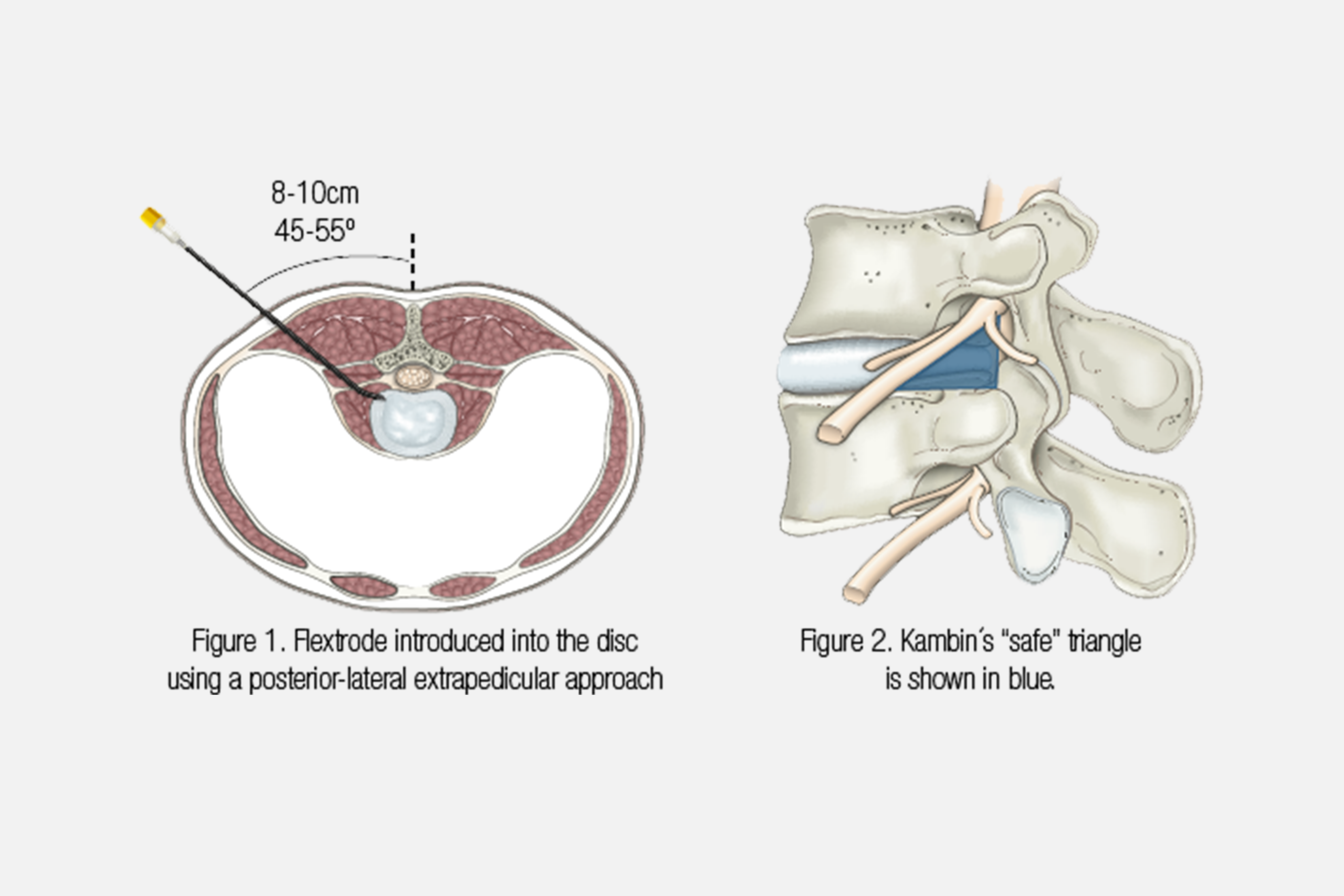
2. Using an extrapedicular approach on the same side as the prolapse (Fig. 1), the Flextrode cannula is positioned parallel to a single
at the vertebral level and advanced through the Kambin triangle (Fig. 2) into the posterior disc. The tip of the cannula is
It is oriented mediolaterally, and its curve lies within the disc.
· If the cannula angle is too shallow, there is a risk of puncturing the epidural space and damaging the nerve roots
nerves or the spinal cord.
· If the cannula angle is too steep, there is a risk of treating the disc too far anteriorly.
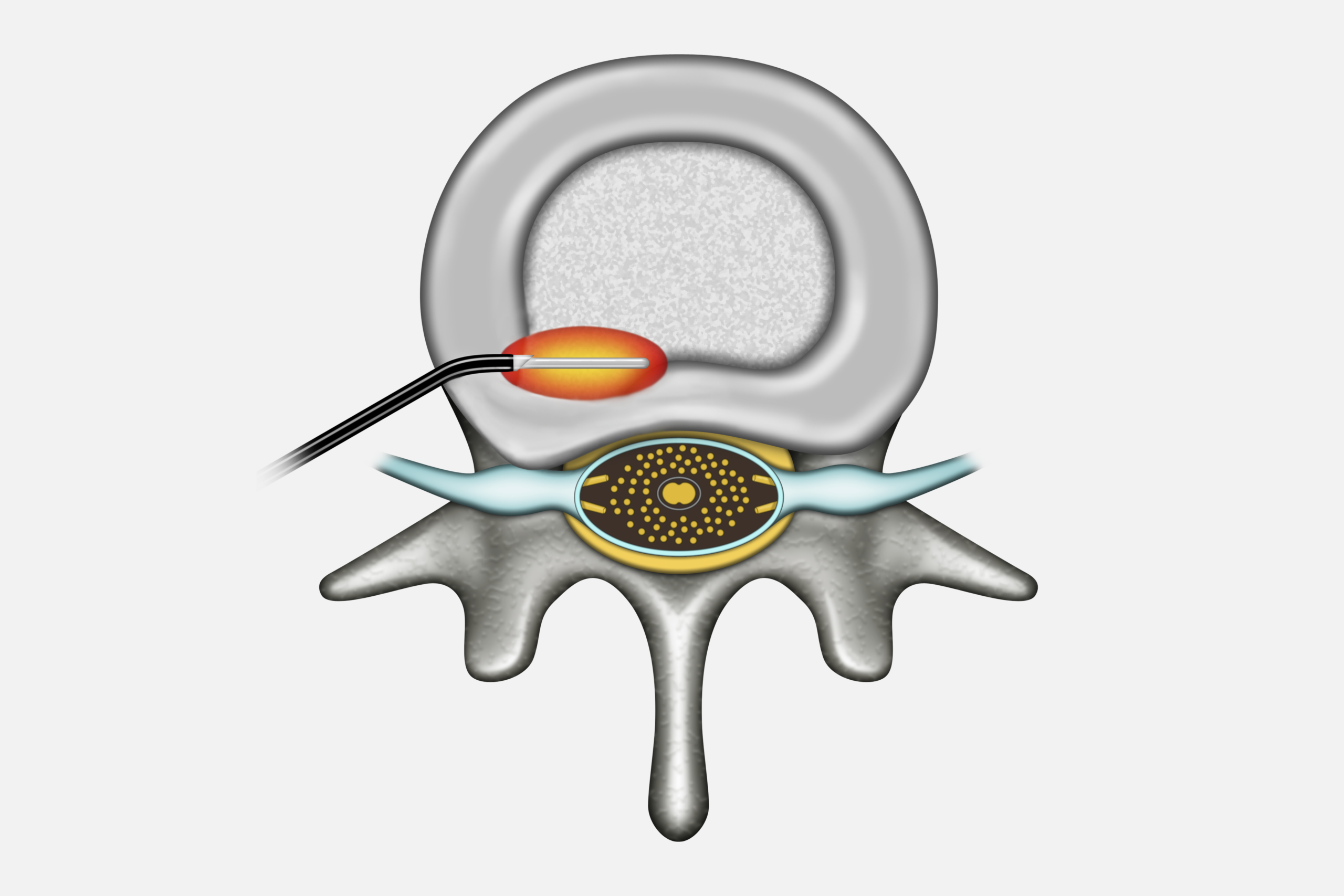
3. The Flextrode electrode is inserted through the cannula so that its tip protrudes halfway from the cannula
laterally on the posterior disc near the prolapse.
4. With the patient awake, sensory (50 Hz) and motor (2 Hz) stimulation of up to 2 volts is applied to rule out
near the root.
· If there is any tingling sensation or motor response, even in any dermatome in or around
below the level of the Flextrode, it must be repositioned far enough away from the spinal canal and nerve roots, and
The stimulation is repeated.
· The Flextrode electrode must always be removed from the cannula before repositioning it.
5. Before performing the RF, perform sensory and motor stimulation (if the patient has been repositioned) and check for X-ray visibility.
X lateral, AP, and oblique views to confirm that the Flextrode cannula and the electrode’s metal active tips are
completely within the disc and separated from the spinal canal and the nearby nerve root.
Treatment
1. Radiofrequency (RF) is applied to the Flextrode for 10 minutes using the temperature setting and following the
automatic stepwise temperature ramp program: 60°C for 1 min, 65°C for 1 min, 70°C for 1 min, 75°C for 1 min, 80°C for 1 min,
85°C for 5 min.
2. The patient is continuously monitored during the procedure to detect any signs of discomfort.
3. After RF application, the Flextrode electrode is removed, and 0.5 mL of ceftriaxone (equivalent to 75 mg) is injected into the disc through the Flextrode cannula
.
4. The cannula is removed, and a bandage is applied to the skin insertion site.
5. After the procedure, the patient remains under observation for 2 days in the hospital, including 24 hours of
bed rest.