
An exhibition at the Thyssen Museum reimagines historical paintings to address cardiovascular health in collaboration with Cardiva and Cultura en Vena
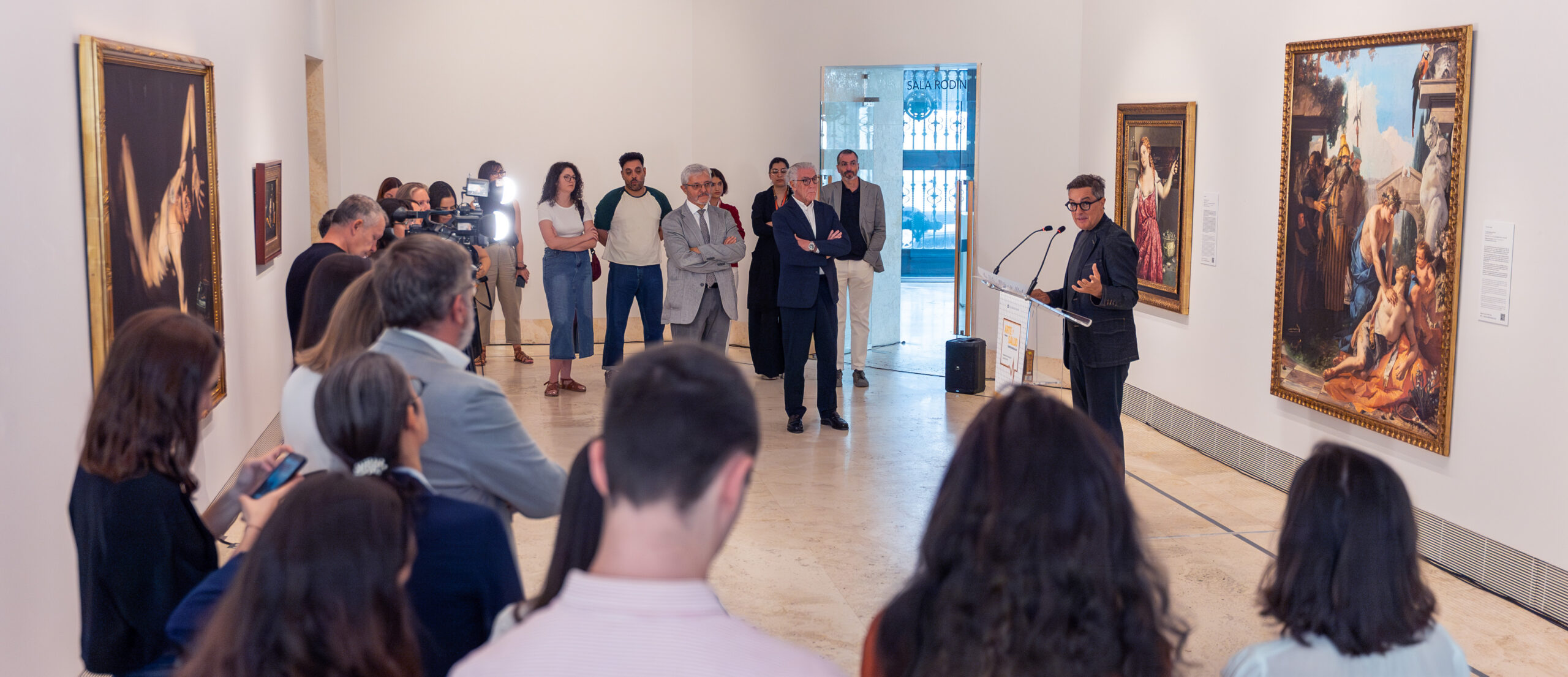
What would happen if the great masters of painting could paint about our health today? That is the question posed by“Art and Cardiovascular Health,”an exhibition on view in Gallery 30 of the Thyssen-Bornemisza National Museum that uses some of the most recognizable works in art history to spark a conversation about heart health.
The exhibition is organized by Cultura en Vena, an association that connects art, culture, and health to promote awareness and well-being through cultural projects, and is supported by the Thyssen-Bornemisza National Museum, which is hosting the exhibition and lending the works, as well as receiving scientific endorsement from the Spanish Society of Cardiology. For this edition, Cardiva, a Spanish company specializing in the distribution of medical technology to healthcare professionals and facilities, has joined as a supporting organization, alongside Daiichi-Sankyo Spain and the Reale Foundation.
The exhibition features digitally altered replicas of works by José de Ribera, François Clouet, Giambattista Tiepolo, William Michael Harnett, and Giambattista Piazzetta. The paintings retain their recognizable appearance but incorporate new elements that alter the interpretation of the scenes and allow for discussions of tobacco, alcohol, diet, a sedentary lifestyle, medication, prevention, and differences in cardiovascular health between men and women.
When the classics start talking about our health
One of the most striking examples is “Objects for a Moment of Leisure” by William Michael Harnett. The original scene depicts a pipe, matches, food, and a newspaper; in the reinterpretation, a bottle of alcohol, medication, and medical test results also appear, transforming an everyday still life into a reflection on how certain habits can ultimately affect our cardiovascular health.
The exhibition thus plays with surprise and recognition: visitors believe they are looking at a work they are familiar with, until they discover that something has changed. From that point on, art becomes a different way of addressing something that is often difficult to incorporate into our daily lives: what we do to take care of our hearts and what habits can put them at risk.
“Cardiovascular disease is the leading cause of death. If we truly want to tackle it, we have to raise awareness among people so they take care of themselves, and art can help us do that,” says Dr. Ignacio Fernández Lozano, president of the Spanish Society of Cardiology.
For his part, Juan Alberto García de Cubas, president of Cultura en Vena, comments: “For centuries, the arts have been asking what lies within our hearts. Today, we want to use those same images to ask ourselves how to take care of it.”
A Different Perspective on Cardiovascular Health
Through its participation in this exhibition, Cardiva seeks precisely to promote a different perspective on cardiovascular diseases, taking advantage of this convergence of fields. Thus, the company wanted to support a project that takes the conversation about prevention beyond healthcare settings and uses art as a starting point to raise new questions. “We thought it was a wonderful initiative to bring health and culture together, and we wanted to do our part,” explains Dina Hurtado, Cardiva’s Director of Marketing and Communications.
The exhibition also coincides with a date closely linked to its theme: World Heart Day, which will be celebrated on September 29. To mark the occasion, Cardiva invites the public to focus on the importance of prevention and how daily habits can influence cardiovascular health, using a language as universal as art.
“Art and Cardiovascular Health” will be on view through October 18 and will continue on October 13 with a conference in the museum’s auditorium that will bring together professionals from the fields of health, culture, and science to discuss prevention, lifestyle habits, and the role of art in raising awareness about cardiovascular health.